




missions project
we're doing at the moment
mission countries
ks. Zbigniew Chwaja SCJ
The means of transport for missionaries
w tymi miesiącu chcemy zebrać:
29 000 zł
you donated:
12 937 zł
44%
last month: 42 636 zł
147%
On missionary assignments, a reliable car or motorcycle is not a luxury or an optional extra – it is an essential working tool and a prerequisite for effective ministry. Missionaries do far more than simply preach the Gospel; they are often also organizers of social and humanitarian assistance. They build schools and hospitals, run feeding programs, dig wells to provide access to clean water, and support local communities in countless other ways. Reliable transportation therefore becomes one of their most important tools – without it, many of these activities simply cannot take place.
To reach communities within their parish, which spans hundreds of kilometers, missionaries often have to rely on the help of locals and on modes of transportation that are in poor condition. Sometimes the driver they’ve arranged to meet doesn’t show up, or the motorcycle or horse-drawn carriage breaks down along the way. Such a journey doesn’t just take a few hours longer. Often, the missionary ends up in the middle of nowhere without provisions or any hope of returning to the mission before dark.
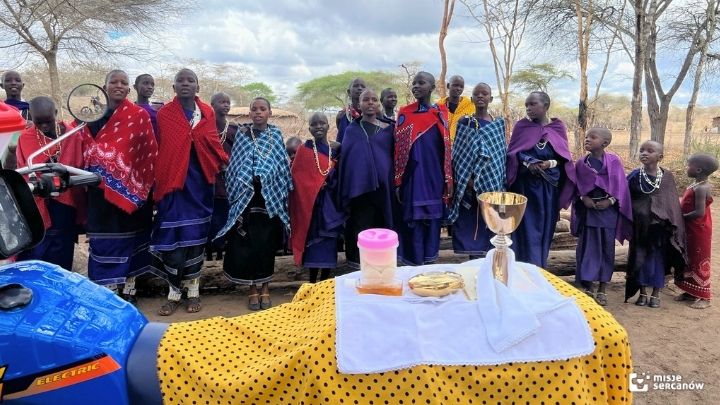
In small villages, those furthest from the parish center, Mass is celebrated only once a month. To reach their parishioners under such difficult road conditions, the missionaries need 4x4 vehicles, which are expensive to purchase and maintain. In Chad, some roads are so impassable that the only viable means of transportation is a motorcycle. Only in this way can missionaries bring the sacraments and the Gospel to the people entrusted to their pastoral care.
Churches in mission countries operate under conditions that are completely different from those of the Catholic community in Poland. In the Philippines, there are between 10 and 90 satellite chapels within a parish. The residents, mainly due to poverty and a lack of cars or motorcycles, are unable to travel to the parish church. It is the missionary who comes to them.
More missionaries are waiting for assistance that can make their evangelization work easier – work that requires them to spend many hours “on the road.” The fund established for this purpose will be used to help finance the purchase of missionary vehicles in areas where conditions are the most challenging.
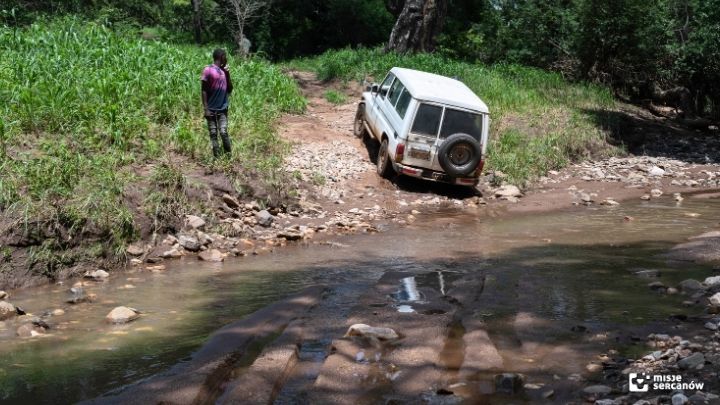
The fundraiser held in June and July to purchase a car for a missionary in Madagascar was a success. Sister Iwona is currently looking for a vehicle that fits within her budget and can handle the challenging conditions of high-altitude off-road driving in “roadless” terrain.
How to Donate
You can support our project by making a bank transfer to the following accounts:
For $: PL 52 1600 1462 1847 3641 5000 0009; SWIFT: PPAB PLPK
For €: PL 41 1600 1462 1847 3641 5000 0013; SWIFT: PPAB PLPK
For others: IBAN: PL 79 1600 1462 1847 3641 5000 0008; SWIFT: PPAB PLPK
Reference: The means of transport for missionaries




poznaj inne projekty