




missions project
we're doing at the moment
Middle East
ks. Nayef Zinati
Help for the Holy Land
potrzebna kwota w tym miesiącu:
4 300 zł
you donated:
1 680 zł
39%
135 575 zł
w sumie na ten projekt przekazaliście
Another war in the Middle East is taking its toll. Increasingly dire reports are coming in from Lebanon - a country that has been mired in economic crisis for years and has once again become a place of fear, destruction, and mass exodus.
In just one month, as many as 20% of the country’s residents were forced to leave their homes. Over a million people lost their homes, including 370,000 children. This is a massive humanitarian crisis in a country with a population of about 4.5 million, which in recent years has taken in nearly 2 million refugees from war-torn Syria.
Israel justifies the bombings as part of the fight against Hezbollah militants, yet civilians are paying the heaviest price. In many towns, schools and churches have been converted into shelters for people fleeing the south of the country. Lebanon’s critical civilian infrastructure - hospitals, schools, bridges, and water and sewage systems - is being systematically destroyed. Thousands of families remain cut off in hard-to-reach areas.
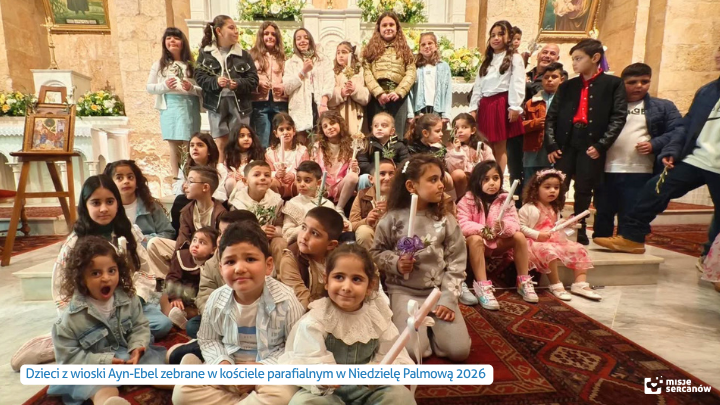
However, not everyone chooses to flee. Ain Ebel, a village located in southern Lebanon and inhabited mainly by Christians (Maronites and Melkites), has a rich history dating back to ancient times and is of great significance to the region’s Christian heritage. Despite shelling in nearby areas, 370 families (about 1,100 people) decided to stay there, while about 80 families left the village.
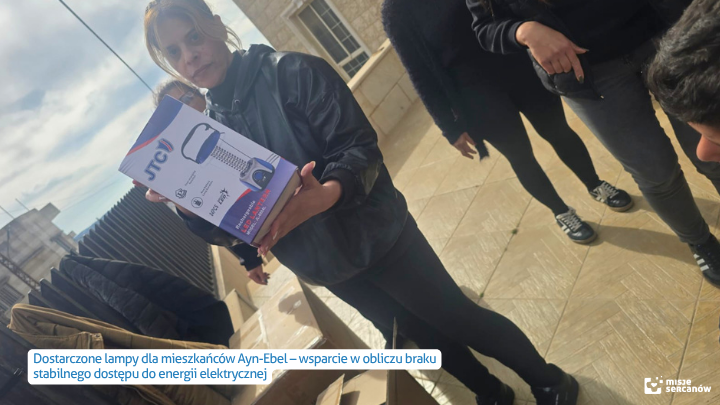
Currently, the residents of Ain Ebel are facing rising poverty and unemployment. They struggle to meet basic needs such as food and heating, and access to healthcare is severely limited. There is a shortage of medicines, and damage to infrastructure has led to unreliable electricity and water supplies.
In cooperation with the Maronite Archdiocese of Antelias in Lebanon, we plan to provide the residents of Ain Ebel with:
- 380 charged electric lamps (costing 7,40 USD each),
- 6 tons of fuel (1215 USD per ton; required: 6 tons every 15 days),
- medicines worth 950 USD per month.
A tragic symbol of the situation in the village is the death of three residents - George, Eli, and Shadi - who were killed in a drone strike on the house where they were installing a satellite dish on the roof. The mother of one of them recalls that, despite his fear, her son refused to leave his hometown: “I asked him to leave, to start a new life somewhere else… but he replied that he wouldn’t leave, that he wouldn’t abandon his family. I won’t leave either… Why are we leaving at all? We aren’t fighting anyone. They’re the ones fighting us.”
A few days earlier, in the town of Qlayaa, also in the south of the country, a Maronite priest, Fr. Pierre Ar-Rahi, was killed when he was struck by artillery fire while trying to help an injured parishioner. “We have decided to stay here despite the danger because these are our homes. We will not allow anyone to enter our village and use it for any purpose. None of us carry weapons. The only weapons we have are peace, kindness, and love,” he said a few days before his death.
In light of these events, the “Help for the Holy Land” project is taking on a concrete form. Its goal is to support the Christians of Ain Ebel, who - despite the authorities’ recommendations - have remained in their village, located just 7.5 kilometers from the border with Israel. We want to address their most urgent needs while strengthening the hope and resilience of this community.
Why is this so important and urgent?
- The Holy Land encompasses not only the territory of modern-day Israel, but also Lebanon - a region with deep biblical and Christian roots.
- More than 80% of Lebanon’s population lives below the poverty line, which significantly limits the country’s ability to cope with yet another crisis.
- In a country considered a bastion of Christianity in the Middle East, the Christian population has fallen over the past century from 77.5% to 34.3%. A further decline threatens to erase this community’s centuries-old presence.
- Ain Ebel, located about 7.5 km from the border with Israel, had previously been in the conflict zone (2023–2024). Although the town had no ties to Hezbollah, the attacks forced some residents to evacuate. There is now a real fear that another escalation will permanently prevent them from returning to their homes and ancestral lands.
Help us save not only people, but also the spiritual heritage of Christianity in the Middle East.
How to Donate
You can support our project by making a bank transfer to the following accounts:
For $: PL 52 1600 1462 1847 3641 5000 0009; SWIFT: PPAB PLPK
For €: PL 41 1600 1462 1847 3641 5000 0013; SWIFT: PPAB PLPK
For others: IBAN: PL 79 1600 1462 1847 3641 5000 0008; SWIFT: PPAB PLPK
Reference: Help for the Holy Land
Read more about this project in the articles:


poznaj inne projekty