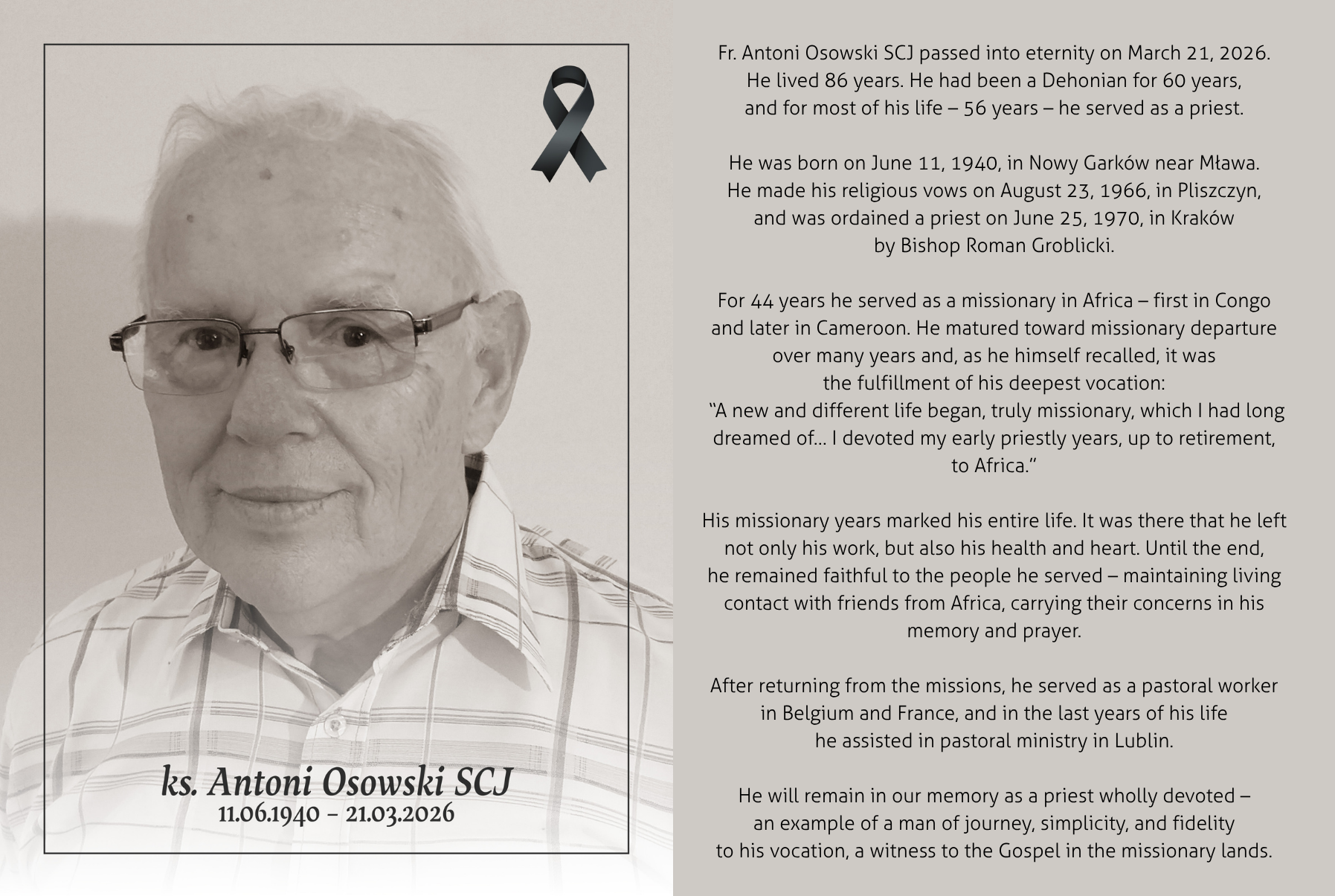


Missionary Memoirs of Fr. Antoni Osowski, SCJ. Compiled by Marta Czajka based on recordings of Fr. Antoni’s meetings with the parishioners of the Good Shepherd Parish in Lublin.
The Path of a Vocation
I was born into a simple, hardworking family. After finishing primary school, I considered entering a minor seminary, but there was not enough money at home. So I chose a school of agricultural mechanization. I completed it, but I never worked in that profession. I joined my father and two brothers, who were bricklayers. The work was hard, but honest.
There was also a time when I worked as a postman. My brother-in-law worked in that profession, and since there were several postmen and they had long holidays, I substituted for them at the post office for five months.
Yet, something deeper was growing within me. When the Dehonian Fathers – Fr. Wincenty Turek and Fr. Jan Góra – came to our parish and preached a mission, I felt that this was my path. I approached Fr. Turek and said directly that I wanted to become a priest. He told me to write an application. I wrote it as best I could. Two weeks later, I received a reply – I had been accepted.
My parents were not happy. I was the youngest, which meant one less person helping at home. But they agreed. I went. I entered the Dehonians.
A Break and a Return
I did not yet have my high school diploma, so I completed it within the congregation in Tarnów. Then I began philosophical studies. At some point, however, I asked my superiors for a one-year break to live outside the seminary. It was not customary to grant such a request, so I had to sign a statement that I was leaving the congregation. I signed it. I moved to Sokołów Podlaski and took a job at a sugar factory.
I worked peacefully until one day the director called me in. He asked whether I had been a priest. I answered no, but I had been in the seminary. He offered me studies at the Warsaw University of Life Sciences – five years of study and then five years of work at the sugar factory. It was a serious offer, essentially a ready-made life path. I did not answer immediately. I said I had to contact my parents. A week later I returned – not with the answer he expected. I handed in my resignation. I knew that if I followed that path, there would be no return to my vocation.
During this time, I received great help from the Salesian Fathers in Sokołów Podlaski. They directed me to their confreres in Frombork. There I worked for eight months on the restoration of the cathedral.
Eventually, I wrote to my superiors asking to return. The answer came quickly: “Come back, we are waiting for you.” I returned.
The Call to Missions
In 1966, the millennium year, I made my second religious profession. The first had been in 1959. I then continued my studies and began theology. After four years, on June 25, 1970, I was ordained a priest in Kraków by Bishop Roman Groblicki.
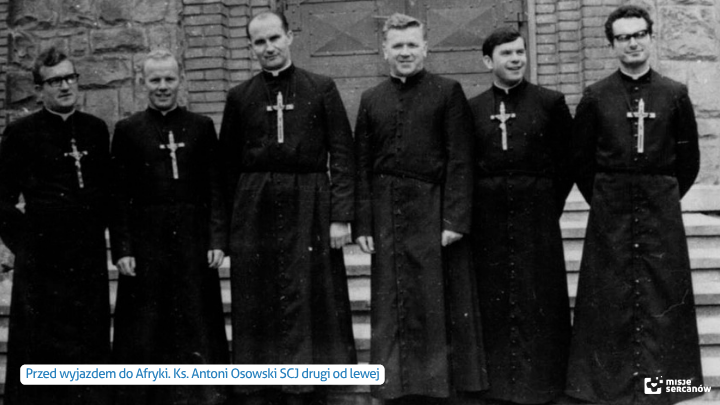
After ordination, I was sent for further liturgical studies. They lasted only briefly, because another call appeared. The provincial superior from Congo came to Poland at that time. After the events of the 1960s – the Simba rebellion, which caused the death of 128 missionaries, including 26 Dehonians there was a shortage of priests there, and many parishes were empty. He asked whether someone would go. I volunteered.
There were three of us. In 1971 I left Poland for preparation in France and Belgium, and in 1972 I arrived in Congo, in Kinshasa.
First Lessons of a Missionary
I remember that moment very clearly. We landed in the morning, around six o’clock. The sun was just rising, but it was already very hot. We stepped out of the plane and were immediately covered in sweat. Then I said in my heart: “Lord God, I am 32 years old. You began Your mission at the age of 30, and it lasted only three years. Whatever happens, happens.”
I had a great desire to learn the language and connect with the people. French was not enough. I had to learn Lingala and Swahili. It was not easy – different grammar, different way of thinking – but by God’s grace I learned. After six months, we were already sent into missionary work.
With an Italian, Danilo, I was in Basuku, on the Kwango River. The parish priest said: “Anuanie and Danilo, you are going to Brusu for a week. Prepare everything and set out.”
So we traveled by pirogue – a simple canoe carved from a single tree trunk – to villages along the river for an entire week. In the first village, we noticed they had prepared something for us: water, sugar, sardines – but no bread. And we had not brought any either. It became clear to me that while one must rely on people, one must above all rely on God, because when He sends, He also provides.
That was the first lesson: a missionary must rely on God. The most important thing is complete surrender to God and trust in Him, because one cannot rely on people alone. People are weak. They can give life, but God gives life and something more – He gives Himself, so that life may continue.
In the Shadow of Fear and Death
The first experiences were difficult. I remember the death of my confrere Danilo. He drowned in the river while traveling by pirogue to fetch the bishop. The driver and the bishop could swim; he could not. They found him four days later, 30 kilometers downstream. It was a very strong experience for me.
The Simba rebellion did not definitively end in 1965. We served during times of unrest and struggle for power. I saw what was happening – violence, death, even among priests. The river ran with the blood of those people. Missionaries gave their lives because they could not or would not leave.
Staying Despite Everything
There were two Polish missionaries left – myself and Władek Jadowski – in a mission 350 kilometers from Kisangani. There was also Father Francis from the Netherlands, aged 73. The provincial superior gave us permission to flee to Kisangani. A plane was nearby; we could have left. We were told clearly: if you stay, you take responsibility for your lives.
“Let François go, we will stay,” we said with Władek. The local Protestant leader witnessed the situation. He burst into tears and said: “You truly love us.”
There were many dangerous situations. Rebels came to the village. They demanded money – we gave what we had. They demanded food – we had prepared packages in storage. They also took one vehicle. I told them: “This car has no brakes.” They took it anyway. We hid our better car in a coffee plantation, and it survived. The sisters were evacuated three days earlier to a village deep in the forest and thus survived.
When rebels arrived, we had to engage with them – people who had come to kill. But they too had hearts. We told them: “We are not Flemish or Belgian, we are Polish.” They took what had been prepared, but left us in peace.
A missionary is someone important to people. During those difficult times, people sometimes came and protected us, staying with us. One could say we had some protection, but the first and most important protection was God.
These were extraordinary times. One must be very careful and truly trust in God, because one never knows. A person leaves for church in the morning and may never return.
The Gospel of Life
The missionary work is, of course, preaching the Gospel, but people pay more attention to life than to words. The Gospel is preached more by life than by words, because words pass away, but deeds remain.
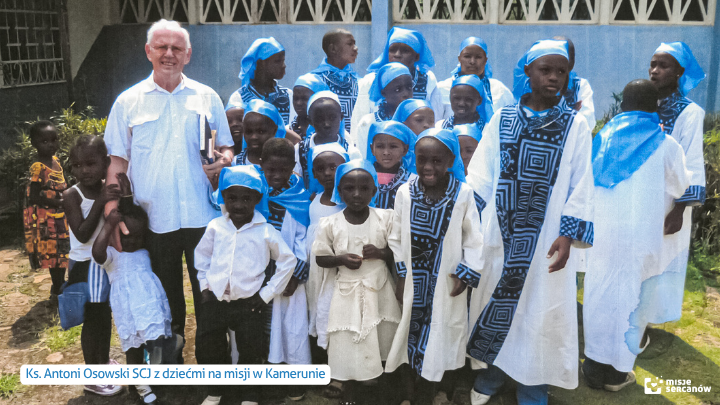
I spent 26 years in Congo. There I suffered a heart attack. After surgery in Kraków, I returned to the missions, but due to the situation in Congo I was sent to Cameroon. I worked there for another 17 years. In total, I spent 44 years in Africa.
I remember one very difficult event in Cameroon. There, in addition to the main church, I had to visit 14 chapels every month. Catechists helped me there. It was Sunday, September 8, the Feast of Our Lady of the Sowing. I arrived in the morning – first confession, then Mass, then a meeting with catechists. But early in the morning a group of elders came and told me not to go, because a rebellion against me was being prepared. The initiator was one of the catechists. Why? I insisted that catechists live according to the teaching of the Church and not in polygamy, which – due to Islam – was legally accepted there.
When I arrived in the village for Mass, I saw something was wrong. During the liturgy, provocations began. I even saw machetes prepared in case of conflict.
I stopped the Mass and left. It was a difficult decision. Later, people came to apologize. It turned out the rebellion had been organized by outsiders. I decided there would be no Eucharist in that village until Advent, but I continued with retreats. People came in large numbers. I explained once again what the Church is and what we believe. That experience taught me patience and truth.
Despite everything, I saw that people truly seek God. They came not only for prayer but also with daily problems. The priest was someone close to them.
Fruit That Remains
Returning from Africa was not the end of my mission. God also allowed me to work in Europe – first in Brussels, then in France, in the founder’s house in La Capelle.
Life in France was demanding. The parish I served covered 42 small churches, sometimes dozens of kilometers apart. In France, almost every village had its own church. We did the same in Congo – we built chapels in each village so that something greater could later arise.
To this day I remain in contact with parishioners from Congo and Cameroon. I try to help as I can. Thanks to support, we managed to help a young girl I baptized. She was 23, studying medicine. She lost her leg in an accident. We managed to raise funds for a prosthesis. Today she can live and work.
I eventually returned permanently to Poland in 2020, although I left Africa already in 2015. Today I live in Lublin. Many members of my family are no longer alive. I look at my life peacefully.
If I may say something at the end, it is this: a missionary must trust God completely. Because words pass away, but life – life remains.