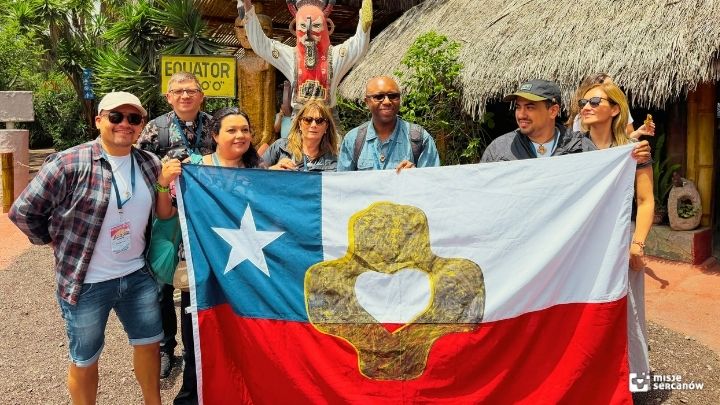


Fr Łukasz Grzejda, SCJ, has been serving in Chile for two years. Becoming a missionary had been his dream since his novitiate, but the reality he encountered in Santiago differed from his expectations. Rather than starting from scratch, he joined a mission shaped by generations of missionaries. In this interview, he talks about the Church in Chile, the challenges of living in a different culture, the role of laypeople, and how mission often means, above all, being faithfully present in people’s everyday lives.
For those who don’t know you, how would you introduce yourself?
My name is Fr Łukasz Grzejda, and I belong to the Congregation of the Priests of the Sacred Heart of Jesus. I was ordained a priest in 2010, so this year marks 16 years since my ordination. After that, I worked in a parish in Kraków and then spent a year in Rome attending a course for formators. When I returned to Poland, I was assigned to the novitiate and seminary, where I served as a formator and educator. Later, I spent four years working in a parish in Lublin. My superiors then sent me on mission to Chile. I now live in Santiago de Chile, where I serve in our Sacred Heart parish and work as a chaplain at a college – a school run by our congregation.
Did you feel called to missionary work from the beginning of your priesthood?
The desire to go on mission first arose during my novitiate. Missionaries would visit us, talk about their work, and share their experiences of ministry outside Poland. At first, I thought about going to Africa, as that was the destination we heard about most often. Over time, however, many Polish missionaries began returning from Africa because more and more local priests were taking up ministry in many areas.
When did you first consider Chile?
During my time in Rome, a meeting was held with superiors from our congregation from around the world. The provincial superior from Chile invited priests from Poland to help with the mission there. I thought that perhaps this was where God was calling me. I submitted a request to go, but after returning to Poland, I had to be patient. Eleven years passed between my initial request and the moment my superiors decided that my ministry was needed in Chile.
Looking back, do you feel that your years of ministry in Poland prepared you for the mission?
I think so. Today, I can see that all my previous experiences – both pastoral and formative – fit together as part of a coherent whole. Thanks to them, I can now serve others by sharing what I have learned and experienced myself.
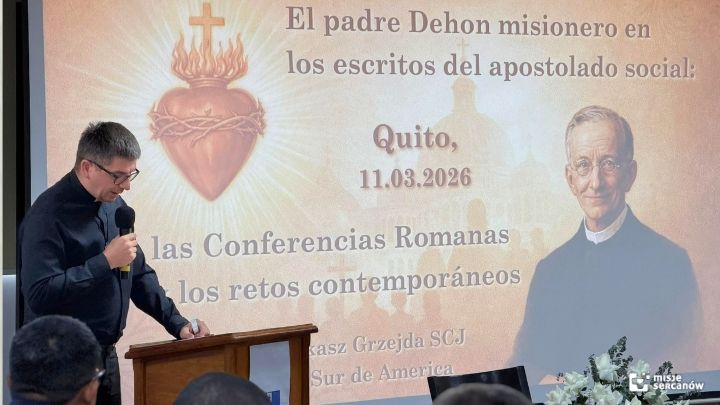
How did the Dehonians first establish their presence in Chile?
The Dehonians have been present in Chile since the 1950s. The mission was initially led mainly by missionaries from the Netherlands, who took charge of one parish and founded two schools. Over time, more confrères joined them, and the congregation expanded its work to additional parishes. We also cooperated with the mission in Argentina, where, among others, Italian missionaries served. However, a lack of local vocations proved to be a challenge. There were few Chilean members of the congregation, and over the years, Dutch missionaries began returning to their homeland or passed away. As a result, our community gradually became smaller.
Was this why missionaries from other countries began to be invited?
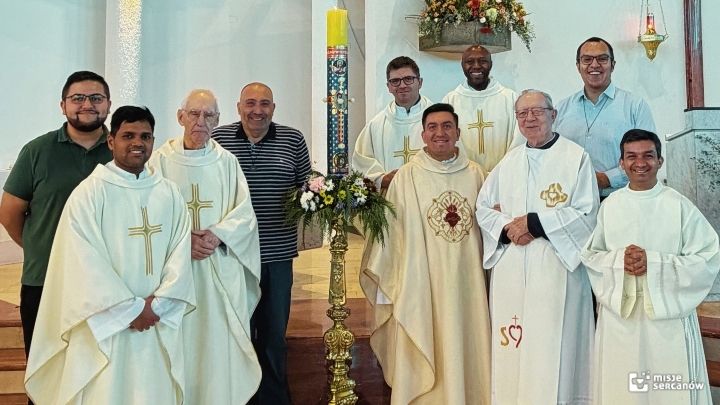
Yes. Around 2013, additional missionaries were invited, including those from Poland. For a time, the situation improved: we took over another parish in Valdivia and continued running our schools. Then the pandemic struck, having a significant impact on our community. Some missionaries returned to their home countries, while several candidates for religious life decided not to continue their vocation journey. When I arrived in Chile on 5 September 2024, there were five priests. I became the sixth. Today, we live and serve in three communities based at different parishes.
What do you remember about the day you arrived in Chile?
I arrived in Chile late in the evening. Two of my confrères met me at the airport and drove me to the house. In my room, I found a note written in Polish that said, “Welcome home.” It is one of those moments that has stayed with me. From the very beginning, I felt comfortable there. I was not anxious or uncertain; instead, I felt warmly welcomed. The same was true when I arrived at the parish where I still serve today. I live with two confrères who are considerably older than me. One is from the Netherlands and the other from Luxembourg, and both are over eighty. They are a tremendous source of support for me. Their experience and knowledge of the local community have taught me a great deal. I sometimes joke that I am a student learning from two masters.
Latin America is often associated with vibrant religious faith. What is the Church in Chile like today?
I think Catholicism in Chile is gradually declining. Until recently, Chile was widely regarded as a Catholic country, but in recent years, the number of people who identify with the Church has fallen noticeably.
Where do those who leave the Church turn?
Some simply abandon their faith and live as if God did not exist. Others join Protestant communities, which have been growing in popularity in recent years. At the same time, I have noticed another phenomenon. After some time, some people begin to miss the Catholic Church. Perhaps they were initially looking for something new, but eventually discover that they need greater spiritual depth. They begin to consider returning to the Church, and some do. It is not a widespread phenomenon, but it is noticeable.
Do you observe this mainly in Santiago, or is it also happening in other parts of Chile?
I can speak primarily about Santiago, where I live and work. It is a huge metropolis with a population of around seven million, representing roughly one-third of Chile’s total population. I have had the opportunity to travel outside the capital several times, including to the area around the Atacama Desert. However, these were short trips, so it is difficult for me to assess what everyday religious life is like there. I have also visited the southern part of the country, particularly Araucanía. It is a quieter, less urbanised region inhabited by the Mapuche, one of Chile’s Indigenous peoples. They have preserved their own language, culture, and strong sense of identity, which they also nurture in their schools. Although they are formally Chilean citizens, they continue to cherish their distinct cultural heritage.
What does your daily ministry in Santiago look like?
We serve in a parish that includes not only the main church but also four outlying chapels. This was quite a surprise to me, as I had associated such chapels with remote communities rather than the heart of a major metropolis. They were established for older parishioners who, over the years, found it increasingly difficult to get to the church. The pastoral team therefore decided to create places of worship closer to where people live.
How do Chileans practise their faith in everyday life?
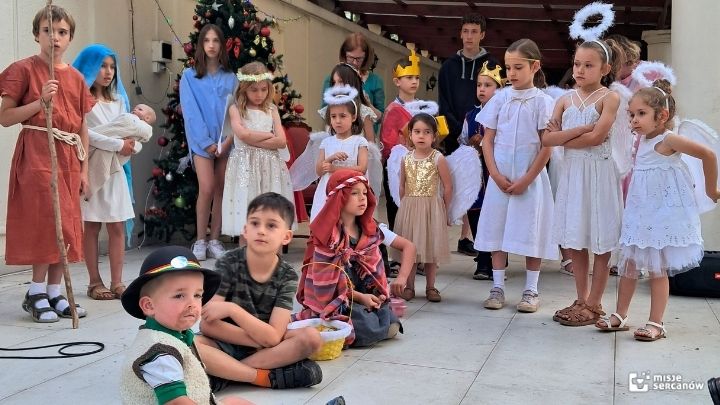
I have the impression that their religious faith is deeply rooted in tradition. At our parish, I often see people come to the church, light a candle by the cross, and pray individually. Sometimes someone will pull up in a car, stop in front of the church, and pray without even getting out. This, too, is a way for them to encounter God and express their faith.
You came to Chile with experience of the Church in Poland. Was it easy to adapt to a new reality?
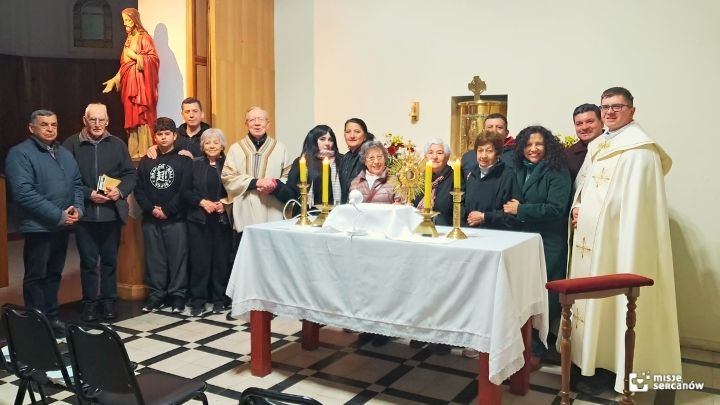
Yes. With each passing day, I became more convinced that this was where I belonged. However, when I first set out on my mission, I had a completely different picture in mind. I associated missionary work with someone travelling to Africa or Asia, reaching small villages, building chapels, and starting everything from scratch. In Chile, I encountered a very different reality. I arrived at a parish with well-organised pastoral activities, a vibrant community, and people who had been building up the Church there for years. My task was not to start from the beginning, but to continue the work of the missionaries who had served there before me.
How similar is pastoral ministry in Chile to what we know in Poland?
In many respects, it is similar: we celebrate Mass, administer the sacraments, hold devotions, and prepare people to receive the sacraments. The main difference lies in the involvement of laypeople. In my parish, lay catechists prepare the faithful to receive the sacraments. We also have two permanent deacons who assist with marriage celebrations, baptise children, and accompany families after the death of a loved one. With relatively few priests available, laypeople take on much greater responsibility for parish life than they generally do in Poland.
What was the biggest challenge for you after arriving in Chile?
The language was certainly one challenge, but not the only one. I also had to adapt to a different way of doing things and approaching everyday life. I get the impression that Chileans often have a more relaxed attitude towards time than we do in Poland. Not everything has to be planned precisely and done straight away. Sometimes something gets done today, and if not, it can wait until later. At first, this was difficult for me because I was used to planning ahead and organising my work carefully. I had to learn to be more patient and flexible.
So, is it a bit like the famous Latin American mañana attitude?
To some extent, yes, although we should be careful not to generalise. It is more about a different approach to time and the rhythm of everyday life. I am speaking mainly about my parish and neighbourhood. Santiago is a very diverse city, with modern, well-organised, affluent areas as well as older districts, such as the one where I serve. It lies closer to the city centre, south of the historic part of Santiago, and has not undergone the same degree of modernisation. At the same time, everything people need is readily available: public transport, shops, and essential services. Chile is an economically well-developed country, so even in poorer neighbourhoods, many people have the opportunity to lead a decent life.
Is there anything particularly distinctive about pastoral ministry in Chile?
I think one of the most striking features is the significant presence of missionaries. I am currently taking part in a course for newly appointed parish priests. There are around twenty-five priests attending, but only two of them are Chilean. The others come from different countries. This shows how heavily the Church in Chile relies on the support of missionaries.
That may come as a surprise, since Latin America is often associated with numerous priestly vocations. Why is Chile facing this problem?
There are many reasons. One may be the way people think about the future. I get the impression that people often focus more on the present. The priesthood, however, requires long-term commitment: preparation, planning, and a willingness to dedicate many years to this path. Perhaps this is one of the reasons why it is so difficult to find people willing to choose this vocation.
Do cultural differences also influence how people practise their faith and approach moral life?
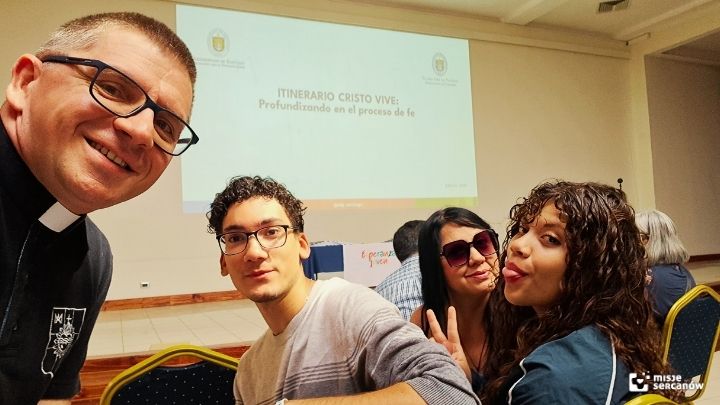
Yes, this can be seen, for example, in the approach to confession. People do not always feel the need to receive this sacrament regularly, as is often the case in Poland. Some go to confession once a year, while others return after a longer break. I get the impression that people do not always view everyday life in terms of moral choices as much as is often the case in Polish religious culture. On the other hand, Chileans have a strong sense of relationships and community. Family ties, solidarity, and mutual support are very important to them. This becomes particularly evident during difficult times. When someone dies, entire families and many friends gather to pray, including people who did not know the deceased very well. There is a great deal of respect and concern for others.
Have any differences in the way people practise their faith particularly surprised you?
Yes. I remember a group of young people aged around 16 or 17 who were preparing for Confirmation. When we discussed confession before the sacrament, I asked them when they had last been to confession. It turned out that, for some, it would be their first confession ever. I was surprised and began asking questions. “When did you receive your First Holy Communion?” They replied that it had been several years earlier. So I asked, “Didn't you go to confession then?” It turned out that some had been baptised shortly before their First Communion and had simply never received the Sacrament of Reconciliation before. They were therefore preparing to go to confession for the first time only before Confirmation. I encountered a similar situation at the college where I serve as chaplain. We announced an opportunity for confession, and a boy in the seventh grade came forward. He told me he had never been to confession before. I asked whether he had been baptised, and he replied that he had not yet received Baptism. He had come to confession even before being baptised. Of course, I explained that he could not go to confession yet, but that we could talk. These experiences show that young people sometimes have to learn the basics of the faith from the very beginning. In Poland, children and teenagers attend religious education classes at school, so they are taught certain things. In Chile, we sometimes have to start with the fundamentals.
Let's talk about the school where you serve as chaplain. What exactly is a colegio?
It is a private Catholic school founded and run by our congregation. For many years, it was managed by Dehonians, and our priests, mainly from the Netherlands, also taught there. As the number of missionaries gradually declined, the school's operations changed. Lay principals and teachers took over its management, and today no Dehonian teaches classes there. My role is primarily that of chaplain. I am responsible for the school's spiritual life, including Masses, the sacraments, confession, and preparing children and their families for First Holy Communion. The school provides education at every level, from preschool through to the final years of secondary education.
Is the college well known and highly regarded in Santiago?
Yes. When people ask me what works we run as Dehonians, it is often enough to mention St John College, as many people know it. The school has a good reputation, and its graduates perform well in examinations and gain admission to good universities. It is a private school, but also a Catholic one. Parents and students understand that faith is an important part of its identity. Each class has a dedicated day of spiritual reflection once a year, and we organise Masses for important occasions, such as the Feast of the Sacred Heart of Jesus, the anniversary of the college's founding, and the beginning and end of the school year. Teachers also take part in their own formation meetings.
I have a slightly unusual question: how do Chileans manage to pronounce your surname?
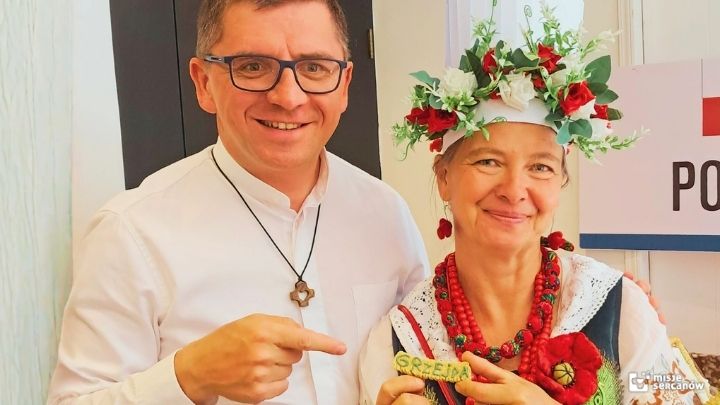
They can't pronounce it! (laughs) They really struggle with it. When I say my surname, they can usually repeat it somehow, but when they try to say it themselves, it becomes much more difficult. They simply can't remember it.
Have you discovered a favourite Chilean dish?
Perhaps my biggest discovery wasn't a main course, but a dessert called harina tostada, which is a kind of toasted flour, a little like very fine breadcrumbs. When you mix it with honey and add a little water, you get a very simple but incredibly tasty dessert. It was a real discovery for me. Once, I had the opportunity to extract honey from a beehive. The fresh honey mixed with this flour and a little water tasted wonderful. Chileans also use the flour when eating watermelon. They sprinkle it over pieces of fruit, and it tastes delicious.
And what about main courses?
I really enjoy pastel de choclo. It is a dish made with meat, usually chicken or pork, topped with a layer of ground corn that gives it a slightly sweet flavour. The whole dish is baked in a clay pot, creating a distinctive, crispy crust on top. It is really delicious. Another dish I like is sopaipillas, which are usually prepared in winter. These are pumpkin-based fritters that can be eaten savoury, for example with cold cuts or avocado, or sweet, with chancaca – a sweet sugarcane syrup flavoured with ingredients such as orange peel. Whenever the rainy weather arrives, Chileans often prepare them.
You have been on the missions for just two years. Do you have a missionary dream?
For now, my plan is to stay in Chile. I am not thinking about moving elsewhere. Missionary work does not always look the way we imagine it will. It is not necessarily about great achievements or ambitious projects. Often, it is about simply being present in people's everyday lives: celebrating the sacraments, accompanying families, and helping wherever we are needed. God leads us through different stages of life. Today, I can see that all my previous experiences – pastoral work in Poland, formation, and educating young religious brothers – were preparing me for this place. However, I do have a dream of one day serving among the indigenous population, particularly the Mapuche people. For now, though, there are only six of us priests, so we first need to take care of the ministries we already have. Two of our confreres are over eighty and continue to serve in parishes. To me, this is a beautiful testimony to fidelity and missionary spirit: remaining where God has sent us, faithfully serving until the end. If more missionaries arrive in the future and an opportunity arises to establish a new mission, I would be delighted to take up ministry among the Mapuche people.
Thank you for the conversation.