




In a place where most families depend on livestock farming and crop cultivation for their livelihoods, and stable employment is hard to find, even a small mill can make a big difference. A new facility is being established in Tanzania to help local people make better use of their own harvests, create jobs and support the development of the entire community.
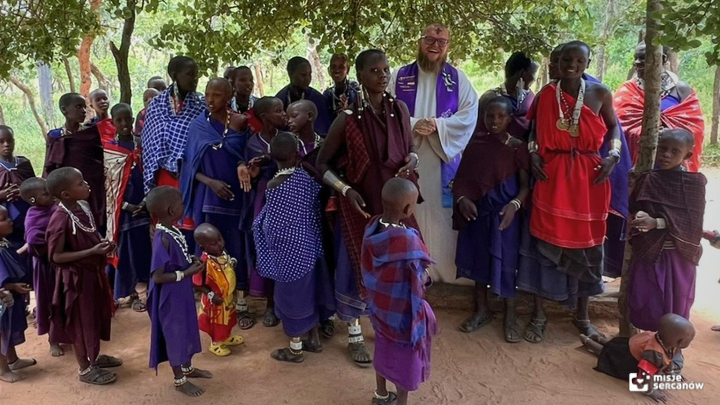
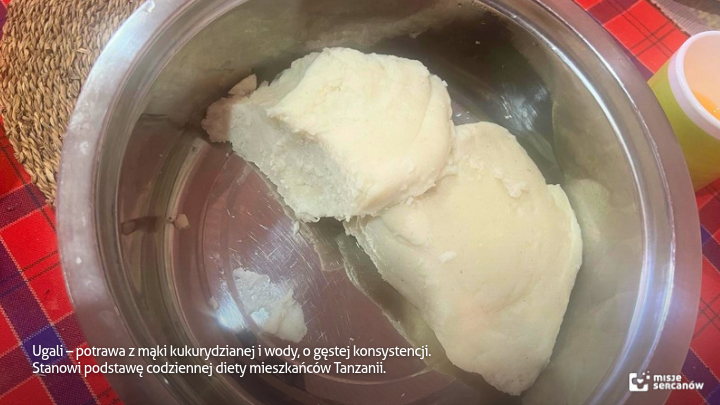
Life in the area served by Fr Adrian Karwowski’s mission parish in Tanzania depends largely on agriculture and cattle herding. The missionary works among the Maasai community, for whom cattle farming is an important part of everyday life and a vital source of livelihood. However, many local people are also engaged in farming. They make a living from the crops they grow on their own land or from seasonal work on other farmers’ fields. The most commonly cultivated crops are maize, sunflower and beans. Maize holds a particularly important place, as the flour made from it is the basis of the local daily diet. It is used to prepare ugali, a thick staple dish that local people most often eat with beans or vegetables.
Although maize plays such an important role in local people’s lives, access to milling facilities remains limited. There are only a few small milling facilities in the area, often operating in very basic conditions. To reach a larger, better-equipped mill, residents have to travel around 45 kilometres. This is why the idea emerged to build a mill on the parish grounds.
“We want local people to be able to mill their crops closer to home and, at the same time, have access to flour produced in cleaner, more hygienic conditions. An important feature will be access to clean running water, which will allow the maize to be properly washed before milling,” explains Fr Adrian.
The mill building will consist of two separate rooms. The first will house a mill for processing maize into flour and bran, as well as a storage area for grain. The second room will be dedicated to extracting oil from sunflower seeds. It will also include storage space for the seeds and the finished oil.
However, as the missionary points out, the facility is intended to serve local people in more ways than simply processing their crops. “Many farmers have nowhere to store their harvests. As a result, they often have to sell their produce immediately after the harvest, when prices are at their lowest. The storage facility at the parish will give them the opportunity to keep their maize and other crops there for several months, for a small fee, and wait for a better time to sell. We are already trying to support local farmers by buying grain from them and offering a slightly higher price than they could get elsewhere,” explains Fr Adrian.
Employment is another important issue. Finding stable work in this area is difficult. Most people rely on casual jobs, usually working in the fields. By opening the mill, the missionary hopes to employ a local Catholic family and provide them with a regular income. “For those who struggle every day with a lack of earning opportunities, this will be a tangible form of support.”
The mill is also intended to support the parish itself. “People will pay for the services, but we want to keep prices reasonable and affordable for local residents. The income generated will help cover electricity bills, the employee’s wages and machinery maintenance. Under the agreed arrangements, 30% of the annual revenue will be allocated to the development of the parish and its ongoing activities,” adds Fr Adrian. In the future, the missionary would also like to use these funds to purchase agricultural machinery and support further initiatives benefiting the local community.
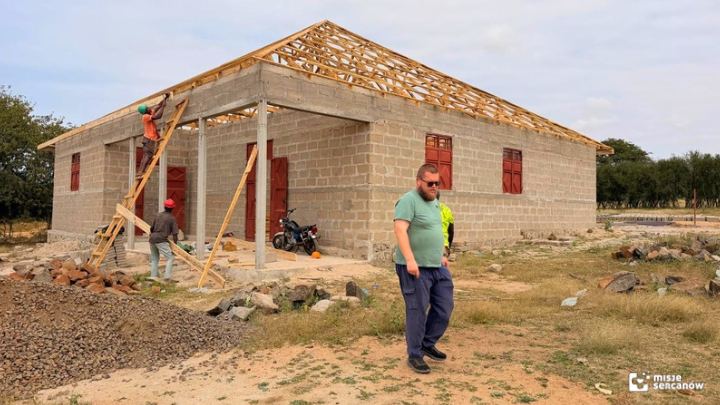
The mill building is already complete. However, an obstacle has arisen on the way to getting it up and running. The equipment requires a three-phase power supply, but the small transformer in the village does not have sufficient capacity to serve additional users. “We therefore submitted an application to the relevant authorities to have it replaced with a larger one. We received preliminary approval, but now we have to ‘wait a little longer’, although nobody can say exactly how long that might be – a month, two months, six months, or perhaps even three years. In situations like this, you often hear the local expression subiri kidogo, which means ‘wait just a little longer’,” explains Fr Adrian.
Fr Adrian’s initiative shows that a mission parish is much more than a church and a place for communal prayer. It is also about people, their everyday challenges, their work and their efforts to provide for their families. “I want to be close to them in these ordinary aspects of life, too. The mill will make it easier for them to process their own crops, provide a place to store them and create opportunities to earn additional income. For the parish, it will also be an opportunity to gradually build its own financial resources and, in turn, undertake further initiatives.”
This is an investment intended to serve the community not only today, but for many years to come. We have fully funded the construction of the mill at the mission parish in Tanzania, at a cost of $24,000, through our “Donation for missions where it is most needed” fund.


